Could an Ancient Greek Remedy Be Your New Modern Apothecary Practice?
What early Greek medicine understood about plants, scent and daily health.

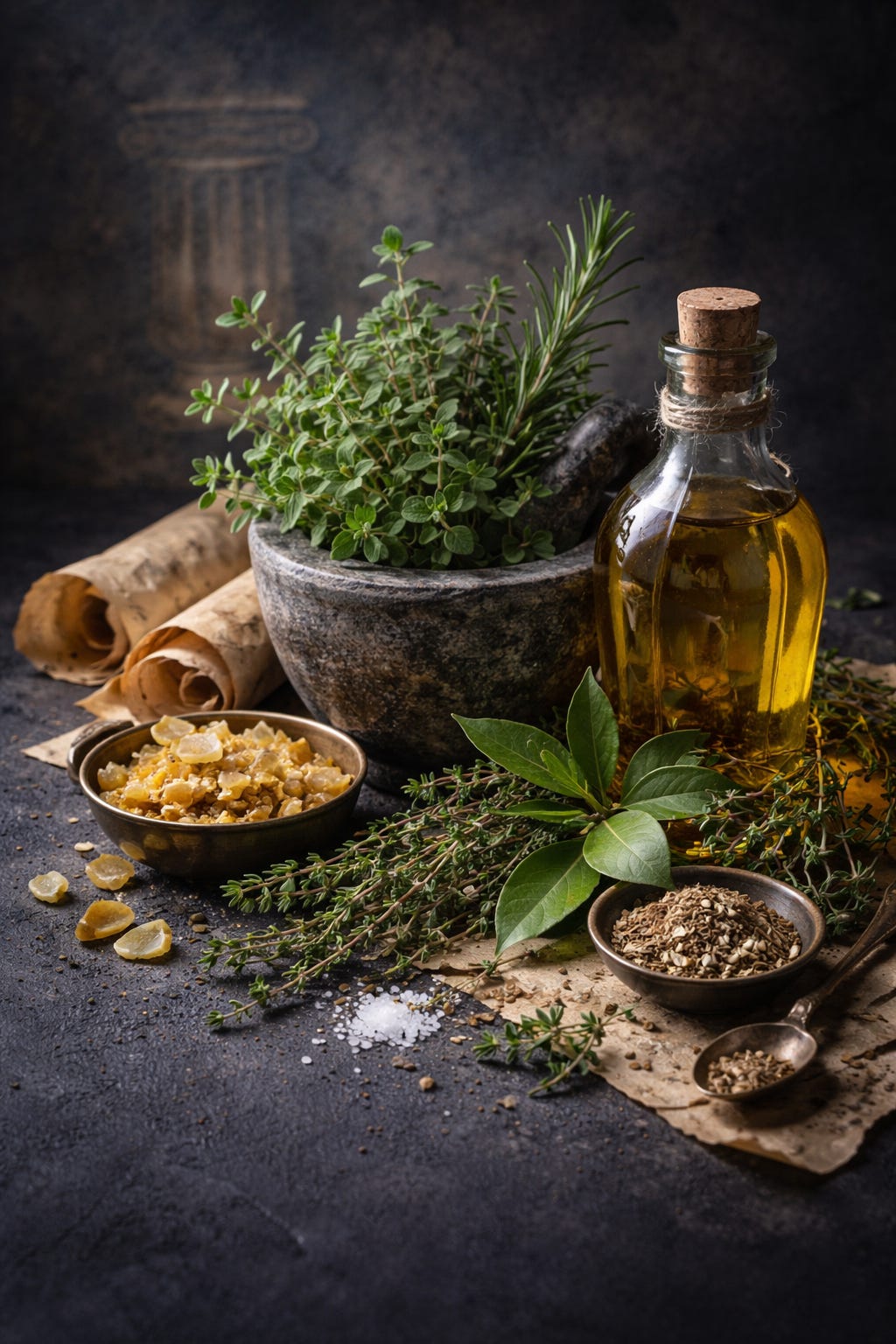
created with AI assistance for The Earth & Flame
What early Greek medicine understood about plants, scent and daily health
Ancient Greece developed one of the earliest recorded systems of medicine in the Western world. Health was approached through observation, environment, diet and plants that could be grown, gathered or prepared at home. Remedies were practical, repeatable and rooted in daily life rather than ceremony.
Physicians such as Hippocrates wrote extensively about the influence of climate, food and herbs on wellbeing. Aromatic plants were valued not for symbolism but for function. Scent was a method of delivery. Oils, steams and infused preparations supported breathing, digestion, focus and physical recovery.
Ancient medicine often worked by observing where tension, fatigue or imbalance appeared in the body. Modern systems sometimes describe this using charts or zones. Today, these same plants can be applied according to how and where the body is being used, whether for work, study, travel or physical activity.
What follows is a look at key ingredients of the ancient Greek apothecary and how they can still be used today.
Mastic Resin
What it is
A natural resin harvested from the mastic tree, traditionally grown on the island of Chios.
Properties recognised in antiquity
Mastic was valued for supporting digestion and oral hygiene, preserving food, protecting wounds and calming inflammatory responses.
How the ancients used it
It was chewed raw to support digestion and mouth health, ground and mixed into olive oil for topical use, burned lightly in oil lamps to freshen enclosed spaces and included in salves for cuts and skin irritation.
Why it was medicinal
Mastic contains natural antibacterial and anti inflammatory compounds. Its resinous structure created a protective effect both internally and externally while remaining gentle on the body.
Aromatherapy and home use
Its aroma is clean, resinous and grounding. It was historically burned in oil lamps rather than used as a heavy scent and is best applied sparingly.
Where it supports the body
It primarily supports the digestive system and the body’s stress response, particularly when tension settles in the stomach or core.
Physical activity and daily use
Helpful for core heavy workouts such as Pilates and dance where stress can affect digestion. It can be used before gym sessions if anxiety shows up physically rather than mentally.
Modern applications
At home, mastic can be infused in olive oil and applied to the wrists or abdomen during stress. While travelling, it may support digestion after flights or unfamiliar food. During work or study, it offers calming support without sedation and can aid concentration during mentally demanding tasks.
Greek Oregano
What it is
A wild mountain herb far more potent than common culinary oregano.
Properties recognised in antiquity
Greek oregano was used to support respiratory health, control infection, stimulate digestion and preserve food.
How the ancients used it
It appeared in herbal steams for respiratory illness, oil infusions for topical use, food preparation to reduce spoilage and wound care for cleansing.
Why it was medicinal
High levels of carvacrol and thymol give oregano strong antimicrobial and warming properties that stimulate circulation and support the lungs.
Aromatherapy and home use
Its aroma is sharp, clarifying and medicinal. It works best in short sessions and is more suitable for steam pots than candles.
Where it supports the body
Oregano primarily supports the chest and lungs.
Physical activity and daily use
It is best suited for cardio based movement such as running, cycling or high intensity training where breathing efficiency matters.
Modern applications
At home, oregano can be used in steam inhalation during seasonal illness or briefly in simmer pots when the air feels congested. While travelling, it may be helpful after exposure to crowded environments. It is not ideal during focused work or study and is better reserved for recovery periods.
Wild Thyme
What it is
A sun grown mountain herb traditionally harvested at peak aromatic strength.
Properties recognised in antiquity
Thyme was used to support respiratory health, immune function, muscle recovery and general cleansing.
How the ancients used it
It was prepared as herbal steam, infused into oils for chest and muscle application, added to baths and burned lightly to freshen living spaces.
Why it was medicinal
Thyme acts as both an antimicrobial and an expectorant. Its aromatic compounds support breathing and physical resilience.
Aromatherapy and home use
Its scent is warm, herbal and strengthening. When diluted, it works well in steam pots and gentle simmer pots.
Where it supports the body
Thyme primarily supports the heart, lungs and upper back.
Physical activity and daily use
It is particularly useful for breath driven practices such as yoga, swimming, hiking and dance, supporting endurance rather than bursts of energy.
Modern applications
At home, thyme can be used as a chest oil diluted in olive oil or added to simmer pots during colder months. While travelling, it supports the body during climate and temperature changes. For children and study, only very mild diffusion is recommended when energy is low.
Rosemary
What it is
A hardy evergreen herb associated with memory and circulation.
Properties recognised in antiquity
Rosemary was valued for improving cognitive clarity, supporting circulation, aiding muscle recovery and lifting mood.
How the ancients used it
It was taken as an infusion for alertness, rubbed into muscles with oil, added to baths and used in households for freshness.
Why it was medicinal
Rosemary stimulates blood flow and oxygenation, supporting alertness without heavy stimulation.
Aromatherapy and home use
Its aroma is fresh and green and it performs well in candles and simmer pots.
Where it supports the body
Rosemary primarily supports the head and upper nervous system.
Physical activity and daily use
It is ideal for coordination heavy movement such as dance, barre, martial arts and strength training where focus and timing matter.
Modern applications
At home, rosemary can be diffused in the morning instead of caffeine or used in a simmer pot during work hours. It supports writing, planning and learning and can also be infused into oil for post workout muscle recovery.
Bay Laurel
What it is
An aromatic leaf used in both cooking and early medicine.
Properties recognised in antiquity
Bay laurel was used to ease respiratory discomfort, support digestion, relieve muscle tension and preserve food.
How the ancients used it
It was infused into oils for aches, added to herbal baths, included in food preparation and burned gently to freshen homes.
Why it was medicinal
Bay leaf offers mild analgesic and antimicrobial effects while warming the body.
Aromatherapy and home use
Its scent is soft, warm and grounding and gentle enough for shared spaces.
Where it supports the body
Bay laurel primarily supports the throat, neck and upper chest.
Physical activity and daily use
It is helpful after strength training, vocal strain or long periods of sitting, supporting gentle recovery rather than stimulation.
Modern applications
At home, bay laurel works well in evening simmer pots or bath infusions for muscle tension. While travelling, it can relieve stiffness from long journeys. For work, it offers subtle support without mental fatigue.
Olive Oil
What it is
The foundation of Greek medicine, cooking and daily care.
Properties recognised in antiquity
Olive oil was valued for protecting the skin, reducing inflammation, improving absorption of herbs and supporting digestion.
How the ancients used it
It served as the base for medicinal infusions, massage, skin protection from sun and wind and internal digestive support.
Why it was medicinal
Olive oil enhances the absorption of plant compounds and supports the skin barrier, making remedies effective and safe.
Aromatherapy and home use
It is the primary carrier for topical preparations and was historically burned in oil lamps.
Where it supports the body
Olive oil supports the whole body, particularly the skin, joints and connective tissue.
Physical activity and daily use
It supports recovery across all movement types including gym workouts, yoga, dance and walking.
Modern applications
Olive oil remains the base for infused oils, post workout massage and post travel recovery and is suitable for adults and children.
Takeaway
Ancient Greek remedies endured because they were restrained, functional and observant. Plants were chosen for measurable effects rather than symbolism. Scent was used deliberately as a delivery method, not as constant background stimulation.
Applied thoughtfully today, these same ingredients can support focused work, calm study environments, physical activity, travel resilience and seasonal health without overwhelming the nervous system or daily life.
If your property or experience champions culture and the quiet art of hospitality, I welcome conversation. The Earth and Flame collaborates with hotels and services that support intentional travel and private club standards, with coverage created on location through itineraries, guides and editorial features.
If you’re a private club member or a parent who travels intentionally, I’d be interested to hear which products have supported your rhythm best. Quiet workspaces, thoughtful child activities, proper dining or somewhere that simply felt like home. Share your experiences below.
Work With Me!
The Earth and Flame collaborates with private clubs, hotels and refined travel services that value culture, discretion and the quiet art of hospitality. Coverage is created on location through itineraries, guides and editorial features written through the lens of Luxury Single Parent Travel and global entrepreneurial life. Each partnership is shaped with intention and respect for heritage, design and the experiences that make a place worth returning to.
If your property or service aligns with intentional travel and private club standards, I welcome conversation.
Enquire About Editorial Coverage

I write about culture, travel and the quiet art of hospitality through the lens of Luxury Single Parent Travel and global entrepreneurial life. My work brings together food, heritage, design and the rhythm of intentional living, with a focus on the places and experiences that respect craft and character. Whether I’m exploring farm-to-table traditions, world coffee culture or destinations that support refined family travel, I approach each story with a sense of curiosity and depth.
If there is a topic you’d like covered or a property that aligns with private club standards and thoughtful travel, I welcome conversation.
Thanks for reading and being part of The Earth & Flame!