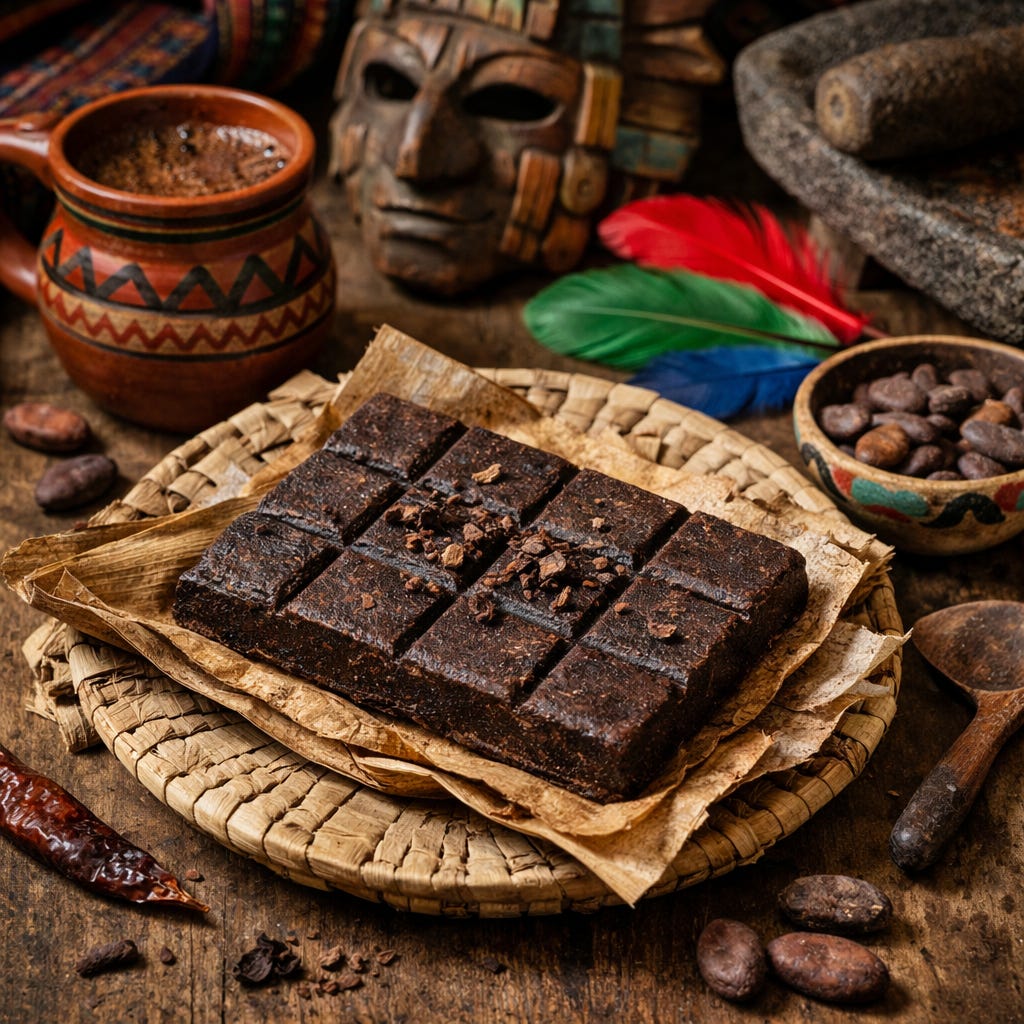
created with AI assistance for The Earth & Flame
When people think of chocolate, they often think of Godiva, Hershey’s, maybe even Snickers bars. But that is not true chocolate. That is what chocolate turned into for mass production. True chocolate is not even called chocolate. It is cacao.
Cacao grows on trees. It is a fruit. A seed. Bitter, powerful and steeped in myth, trade and ritual. Once revered by ancient civilisations of Mesoamerica as sacred sustenance. Consumed as a spiced, frothy drink, it was reserved for nobility, warriors and ceremony. The cacao tree is known as Theobroma cacao, meaning food of the gods. The Maya and Aztec peoples ground roasted cacao with chilli and spices, believing it to bring strength, stamina and spiritual clarity. This was not indulgence. It was intention.
Cacao entered Europe through Spanish conquest, where it was first consumed in a form closer to its Indigenous origins. Over time, sugar and cream were added to soften its bitterness for European palates. The bean was pressed, refined and increasingly manipulated. What was once wild and grounding slowly became sweetened, controlled and commercialised.
By the seventeenth century, pressed cacao blocks were shipped across Europe, prized in aristocratic kitchens and served in salons. What began as ritual became indulgence, then commodity. The modern idea of chocolate emerged through centuries of refinement. And yet cacao in its pure form remains. Earthy. Complex. Uncompromising.
Tasting Cacao
Tasting cacao is not dessert. It is closer to wine or tea. The focus is origin, not sweetness. Choose single origin or ceremonial grade cacao. Avoid blends diluted with sugar or fillers.
Begin with aroma. Floral, smoky, nutty or mineral depending on where it was grown. Break the disc or bar and note the texture. Let it melt slowly on the tongue. Flavour notes may reveal citrus, plum, soil, ash or tobacco. Cleanse the palate between tastings with warm water or a bite of banana. Cacao rewards patience. Cacao tea works well as a palate cleanser, keeping the flavour conversation intact rather than resetting it entirely.
Beyond Flavour
Cacao contains theobromine, a gentle stimulant that elevates mood without the sharp spike of caffeine. Rich in magnesium and iron, it supports heart health, focus and nervous system balance. For centuries it has been used not only as food, but as a tool for emotional and spiritual awareness.
Modern chocolate often strips cacao of these qualities. Sugar replaces substance. Speed replaces ritual. Pure cacao remains both nourishment and presence.
Cacao also has a sensory effect that goes beyond taste. Its aroma alone carries volatile compounds that register immediately, especially when prepared warm. Combined with naturally occurring theobromine, cacao creates a sense of alert calm rather than stimulation. It sharpens attention without agitation. This is part of why cacao has historically been consumed slowly and deliberately, rather than eaten absentmindedly.
Where Cacao Is Headed
Cacao is quietly finding its way back into kitchens and onto tables in its original form. Chefs are working with it beyond dessert, pairing it with savoury ingredients like wild mushrooms, game and fermented flavours. Sommeliers are beginning to treat cacao the way they treat wine, paying more attention to where the bean comes from and the actual flavour profiles.
Away from mass production, small producers are focusing again on sourcing, fermentation and roast. Less sugar. Less interference. More precision. The interest is not in novelty, but in craft.
Cacao does not need reinvention. It is the origin. When handled properly, it behaves like any serious ingredient. An ingredient with depth. A flavour with history. Something to be savoured, not binged on on a Saturday night after a bad day.
The Scent of Cacao
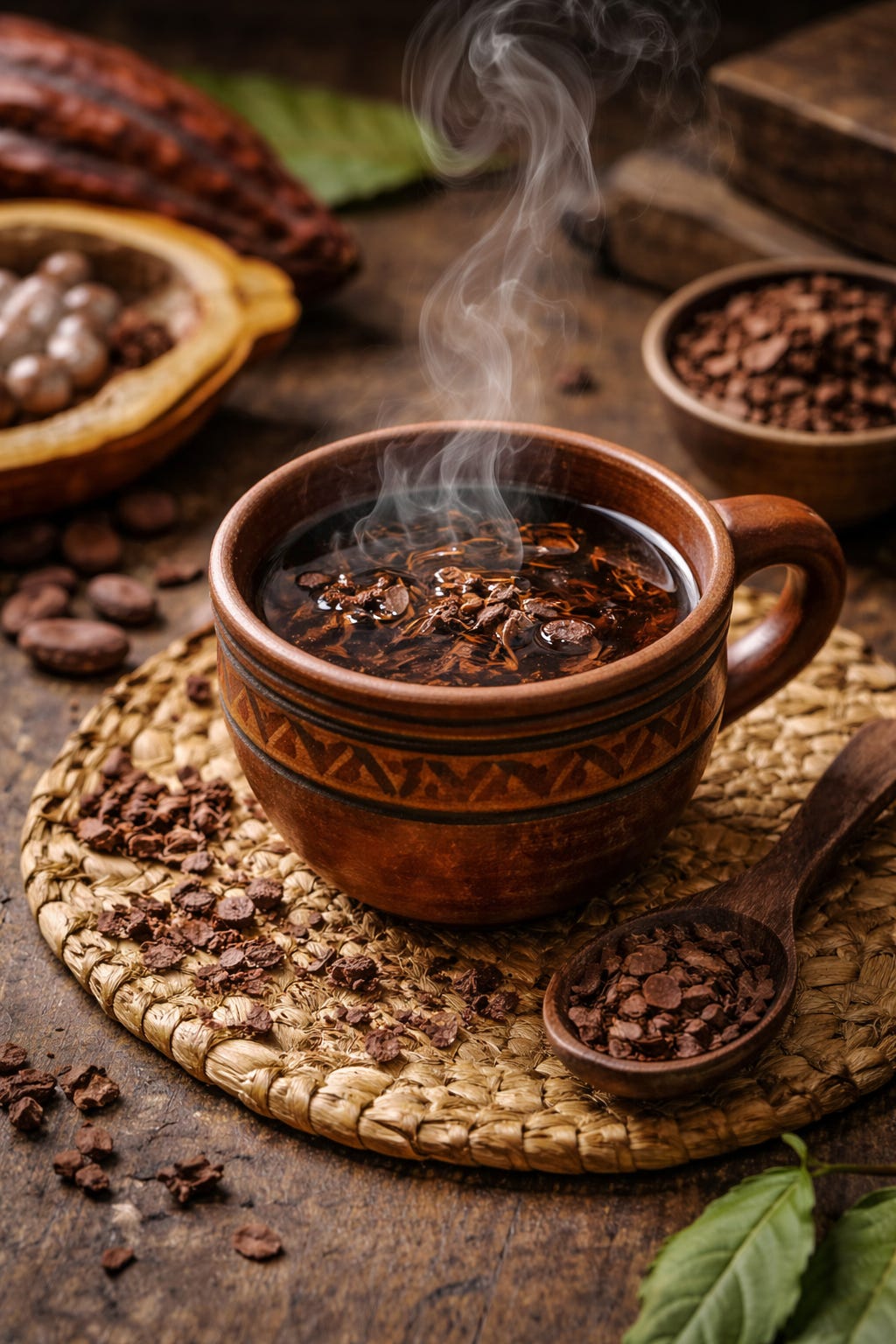
Cacao’s aroma is more than romanticised comfort. The volatile compounds released when brewing ceremonial cacao or steeping cacao husk tea include natural aldehydes and esters that cue the brain into awareness. There is a reason the scent of roasted cacao is used in perfumery and culinary labs. It evokes memory, concentration and a grounded state of attention. The effect is quiet but unmistakable.
Cacao at the Source
Some cacao producers now open their farms to travellers, inviting them to walk the rows of trees, watch beans ferment and taste the difference between varietals. It is less wine country and more jungle atelier. Mud, fruit, roast and rhythm. These agrotourism experiences exist from Ecuador to Guatemala to the Dominican Republic and often include bean-to-bar workshops or tea tastings with local growers. No resort fluff. Just raw process and real knowledge.
Some things are worth sitting with. And cacao in its origin form is one of those things. It lingers on the tongue. Entrenches in the memory. And makes every moment last, both in taste and occasion.
Enjoy the flavour? Share this with someone who has taste.
You Might Also Like
Have you ever tasted cacao in its origin form? Or walked a plantation and smelled the roast straight from the source? Leave a comment and share your cacao favourites!
If your property or experience champions culture, seasonal foodways and the quiet art of hospitality, I welcome conversation. I collaborate with hotels, chefs and hosts who support intentional travel and meaningful dining. If that sounds like you, feel free to message me.
Work With Me
The Earth and Flame collaborates with private clubs, hotels and refined travel services that value culture, discretion and the quiet art of hospitality. Coverage is created on location through itineraries, guides and editorial features written through the lens of Luxury Single Parent Travel and global entrepreneurial life. Each partnership is shaped with intention and respect for heritage, design and the experiences that make a place worth returning to.
If your property or service aligns with intentional travel and private club standards, I welcome conversation.
Enquire About Editorial Coverage

I writl and global entrepreneurial life. Work spans food, heritage, design and the rhythm of intentional living, with a focus on places and experiences that honour craft and character. From farm-to-table traditions and world coffee culture to destinations that support refined family travel, each feature is approached with curiosity and depth.
For properties that align with private club standards and thoughtful travel, or for stories that honour intention and elegance are always worth a conversation.
Thanks for reading and being part of The Earth & Flame!